
It’s Not THAT Scary! Rental Math Explained
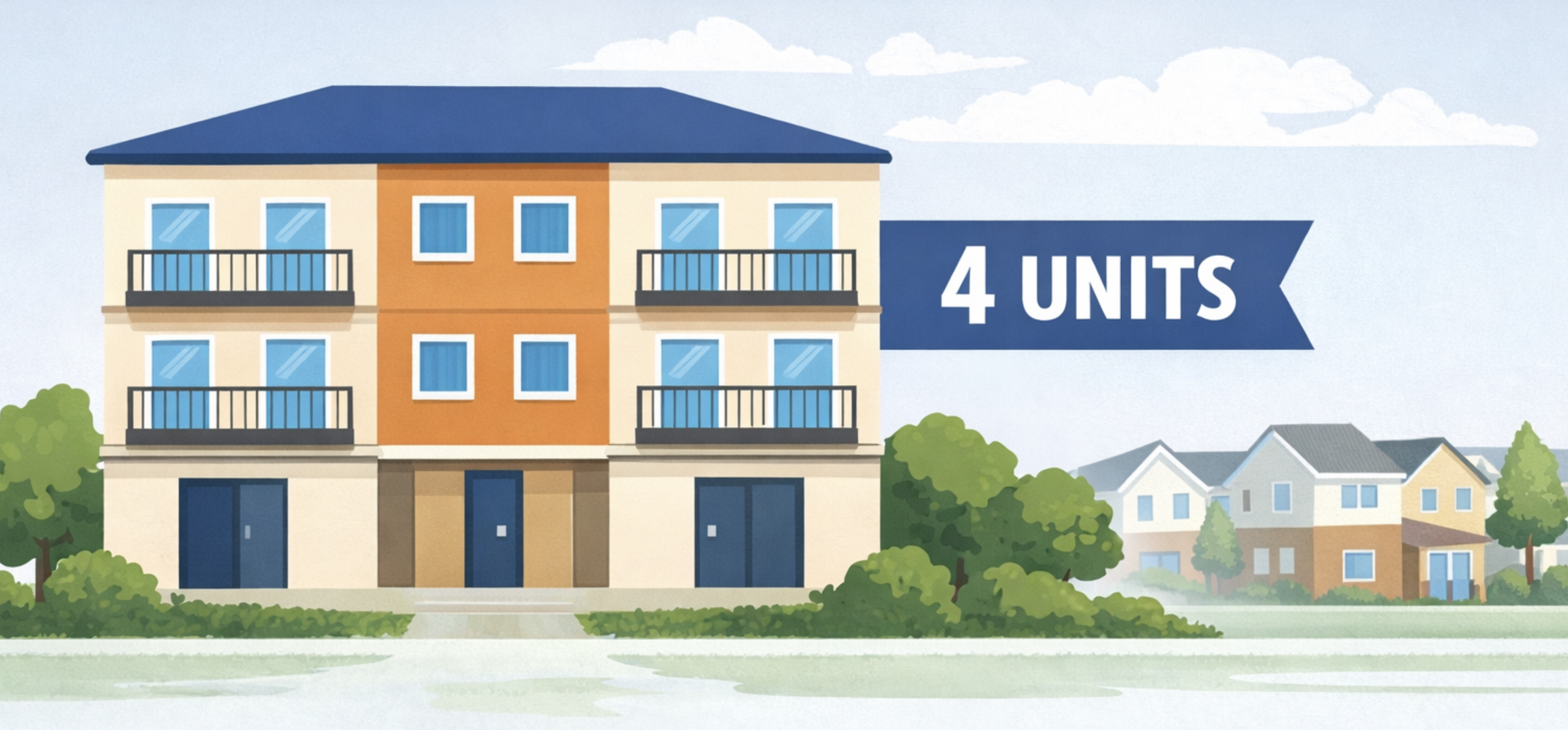
Here’s a simple way to think about a financial investment analysis for rental properties along with clear definitions of the key terms. How do the results compare with your investment objectives?
Start with the basics: income & expenses
Let’s use the example of a four unit residential rental property. Assume each of the 4 units rents for $1,200 per month.
Gross (Total) Rental Income
$1,200 × 4 units × 12 months = $57,600 per year
Now estimate typical yearly operating expenses (simple examples):
Property taxes: $6,000
Insurance: $2,400
Maintenance & repairs: $3,600
Property management (10% of rents): $5,760
Utilities/other (usually tenant paid but if landlord pays part): $2,240
Total Operating Expenses = $20,000
Key term: NOI (Net Operating Income)
📌 Definition: NOI (Net Operating Income) is the money the property generates after operating expenses, but before loan payments, income taxes, and depreciation. It shows how profitable the property is on its own.
👉 NOI = Income − Operating Expenses (not including mortgage payments or taxes)
So, from our example: $57,600 (income) − $20,000 (expenses) = $37,600 NOI
Key term: CAP Rate (Capitalization Rate)
📌 Definition: Cap Rate measures the return on the property if you bought it in cash. It helps compare properties regardless of financing.
Higher cap rate → generally higher risk, higher return
Lower cap rate → usually safer areas, lower return
👉 CAP Rate = NOI ÷ Purchase Price
Let’s say the property costs $600,000:
So, from our example: $37,600 ÷ $600,000 = 0.0627 → 6.27% CAP rate
What this tells an investor
With our example numbers:
NOI: $37,600 per year
Purchase price: $600,000
Cap rate: ≈ 6.3%
That means:
“If I paid cash, this property would earn about 6.3% annually from operations.”
If the investor uses financing, they’d also compare:
Mortgage payment
Cash flow after debt
Long-term appreciation
Tax benefits
But NOI and CAP rate are the starting point for deciding whether the deal is worth deeper analysis.
Quick checklist for analyzing a 4-unit deal
✔ Verify realistic rents (not just listing projections)
✔ Estimate vacancy (5–8% is common and market strength dependent)
✔ Include real operating costs (not just taxes/insurance)
✔ Compare cap rates to similar properties in the market
✔ Run cash-flow scenarios with and without financing
Last Word / Final Thoughts:
While there are a myriad of considerations when selecting an investment property, choosing and advisor - and Realtor - with real life investing, construction and property management experience will help avoid pitfalls in real estate investing!
If you’re looking for a partner who understands every angle of real estate — from smart investing and strategic financing to efficient property management and quality construction — I’m here to help you succeed. I’ve spent years building real value for clients by identifying opportunities others miss, protecting cash flow, minimizing risks, and maximizing long-term returns.
Whether you’re purchasing your first rental, optimizing an existing portfolio, or planning renovations to increase property value, my experience and strategies work entirely in your favor. I don’t just help you buy or sell — I help you make confident, well-informed decisions that build wealth over time.
Let’s take the next step together and turn your real estate goals into results. When you’re ready, I’m ready — and I’d be honored to earn your business.
